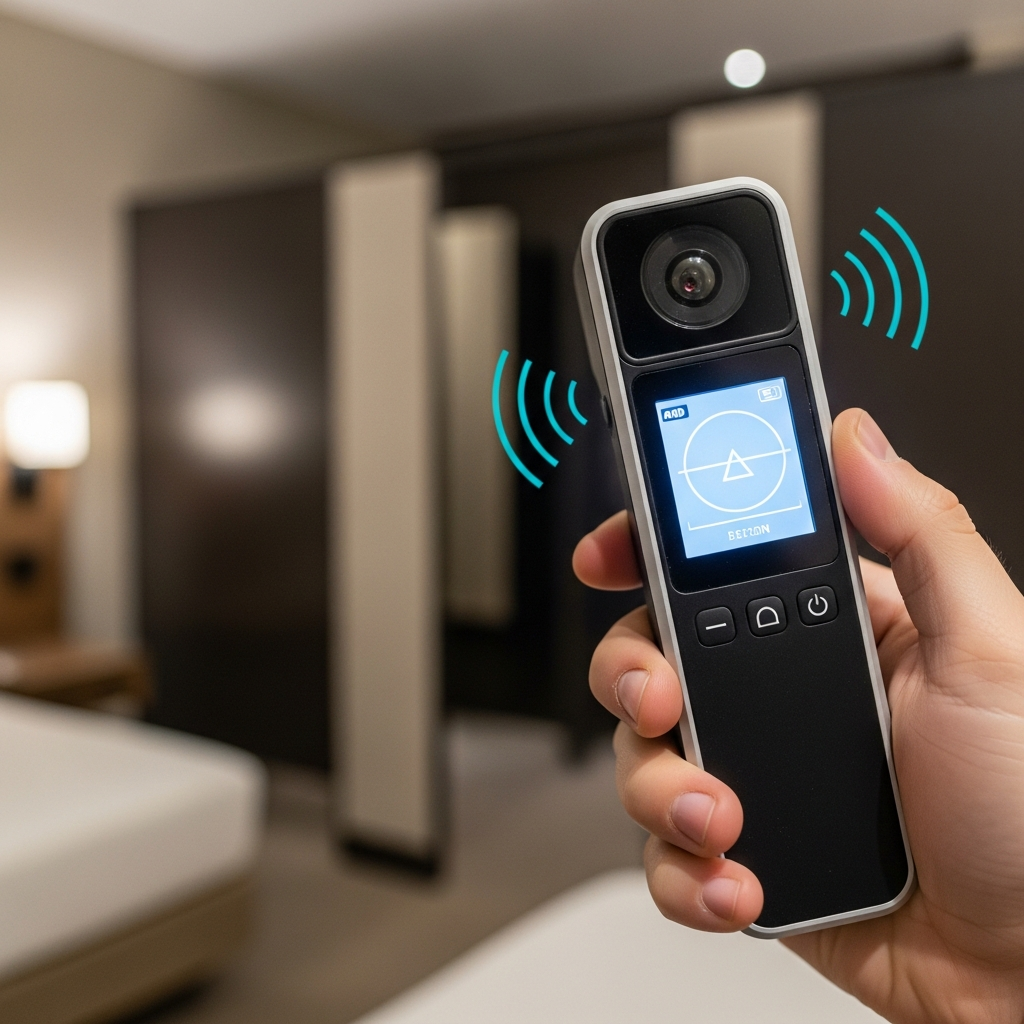
We live in an era where invisible threats lurk everywhere. The anxiety that our temporary resting or staying places, and even our most private spaces, could be under someone's secret gaze is one of the major shadows weighing down modern life. From hotel rooms and Airbnbs to public restrooms and changing rooms, the threat of illegal filming cameras, commonly known as "molka" (hidden cameras), is growing in every corner of our daily lives.
Amidst this anxiety, the "hidden camera detector" has emerged as an essential item for protecting personal safety. Can these small devices truly provide complete protection for our privacy? In this article, we will clearly and kindly provide you with everything you need to know, from the serious reality of hidden cameras to the types and usage of detectors, as well as their limitations and countermeasures. Your smart guide to protecting your precious space and privacy begins now.
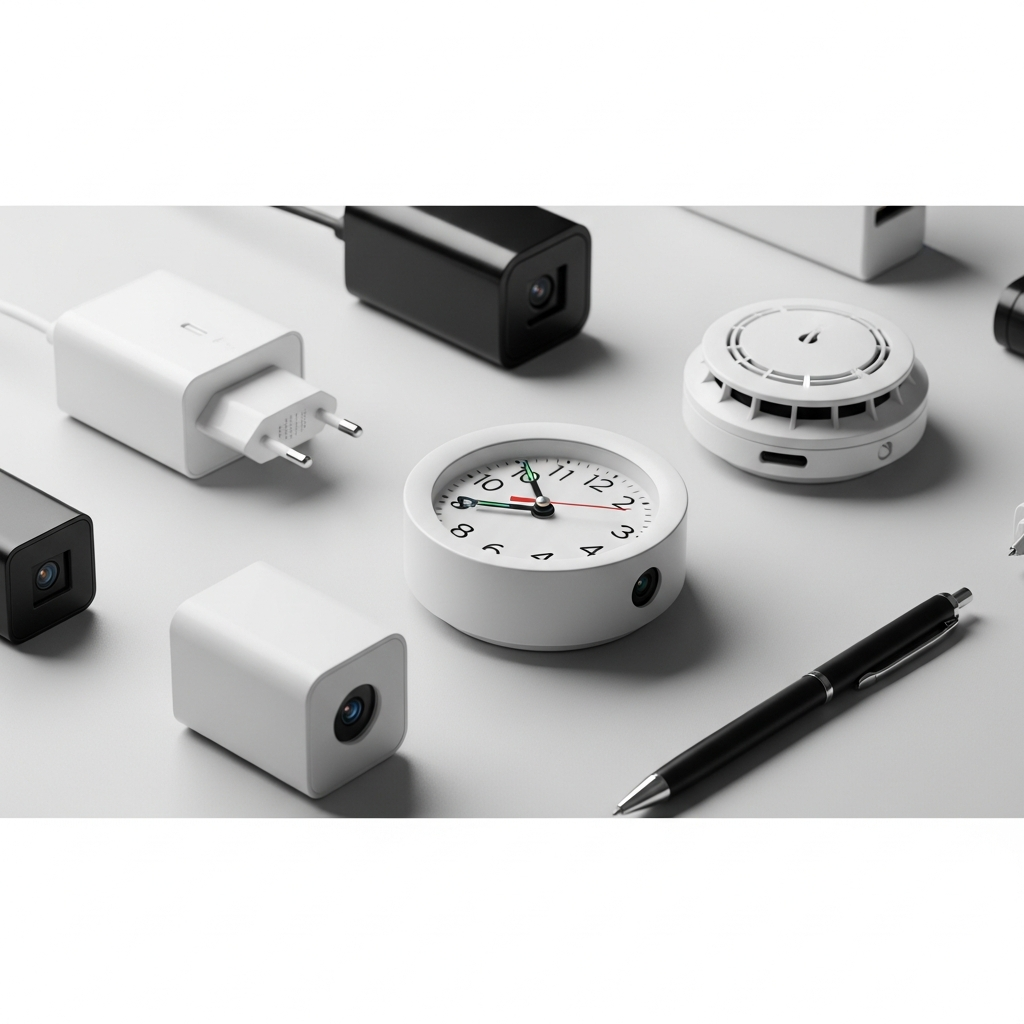 Miniature hidden cameras disguised as everyday items
Hidden Cameras, No Longer Someone Else's Problem: The Worsening Reality of Illegal Filming
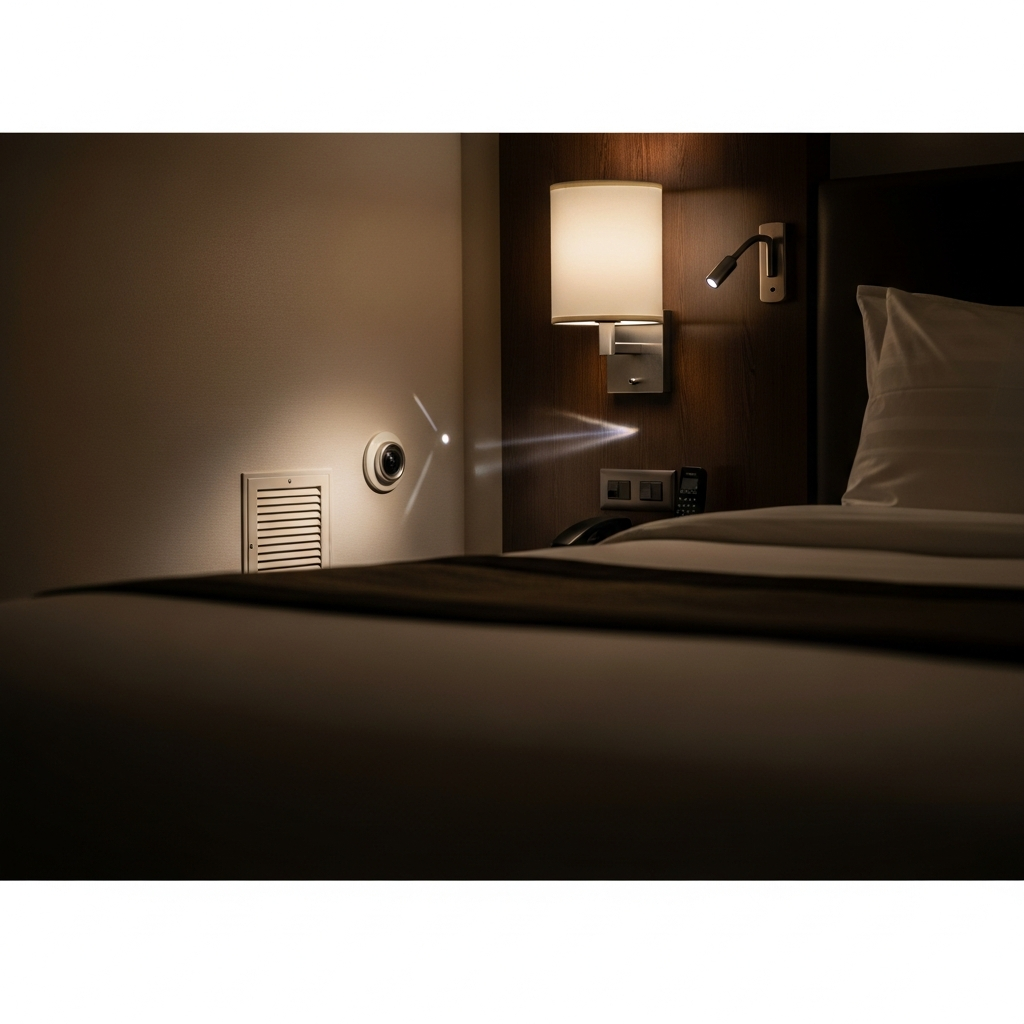 A scene implying a hidden camera near a hotel room wall vent
Illegal filming is more than just a simple crime; it's a digital sex crime that utterly destroys individuals' lives. With technological advancements, hidden cameras have also evolved, penetrating deeper into our daily routines. It has now become a serious social issue that is difficult to prevent through individual efforts alone.
Shocking Overseas Cases: The Reality of Hidden Camera Distribution in Chinese Hotels
A recent shocking BBC report vividly illustrates the severity of hidden camera crimes. It revealed the alarming reality of thousands of illegal filming videos being distributed from a single hotel room in China. According to the report, a camera was installed inside the wall ventilation system of the room, facing the bed. This device could not be detected by common hidden camera detectors available on the market. The methods were highly sophisticated and malicious, with filming beginning the moment a hotel key card was inserted, and sexual acts being live-streamed in their entirety.
Even more chilling is the fact that the process of removing this camera was shared via a Telegram channel, and the operator announced that "alternative equipment is newly operational in other hotels," mocking the guests. This suggests that it's not merely a few isolated incidents but an organized crime with a vast supply structure involving intermediaries and 'camera owners.' Such cases warn us of how covert and professional hidden camera crimes have become, evolving to a level beyond our imagination.
Threats Around Us: The Shadow of Hidden Cameras in Everyday Life
The shocking overseas cases are not just distant stories. In South Korea, there are continuous reports of hidden cameras being found not only in accommodations like hotels, motels, Airbnbs, and officetels, but also in various other spaces such as public restrooms, changing rooms, and even fitting rooms. Especially recently, with the advancement of miniature camera technology, hidden cameras disguised as everyday items like USB chargers, screws, clocks, picture frames, and pencils have emerged, making them difficult to identify with the naked eye.
These hidden cameras are primarily used to secretly observe others' private lives and distribute the footage for economic gain or malicious purposes. They inflict lifelong psychological trauma and suffering on victims, becoming a major cause of increased anxiety throughout society. Now is the time to move beyond the complacent thought of "Surely not me?" and instead adopt a vigilant mindset of "Just in case," taking proactive steps to protect ourselves.
Hidden Camera Detectors: Are They Effective? Types and Principles
As the threat of hidden cameras grows, so does interest in hidden camera detectors. However, with such a wide variety of products on the market and varying performance levels, it can feel overwhelming to choose the right one. Understanding the types and operating principles of hidden camera detectors will help you make a wise choice.
Various Types and Operating Principles of Hidden Camera Detectors
Hidden camera detectors can be broadly categorized into several types:
- Lens Detectors (Infrared Detectors): These utilize the principle that camera lenses reflect light. The detector emits infrared light, and by detecting the reflected light, it can locate hidden lenses. If you spot a small, sparkling dot, it's likely a hidden camera. They are relatively inexpensive and easy to use, but have limitations as they struggle to find cameras with completely obscured lenses or those that are powered off.
- RF Signal Detectors (Radio Frequency Detectors): These detect specific frequency signals emitted by wireless hidden cameras that transmit video wirelessly. Detection is only possible when the hidden camera is actively operating; they cannot detect wired cameras or those that are powered off. However, for wireless hidden cameras, they have the advantage of detecting strong signals and pinpointing their location relatively accurately.
- Combined Detectors (Multifunction Detectors): These products incorporate both lens detection and RF signal detection capabilities. Some also include additional features like magnet detection, magnetic field detection, and vibration sensing to enhance detection rates. Professional-grade equipment often detects listening devices and GPS trackers as well.
- Smartphone Apps: There are also apps that utilize a smartphone's camera and magnetic field sensor. They work by using the camera flash to find lens reflections or by detecting changes in magnetic fields to locate electronic devices. While convenient to use, their accuracy may be lower than that of professional detectors.
As seen in the aforementioned Chinese hotel hidden camera case, some highly sophisticated hidden cameras are often not detected by common detectors. This could be because the camera is wired, installed in an environment with strong signal interference, or specially designed to evade detection signals. Therefore, it's crucial to combine various methods rather than blindly relying solely on a detector.
Smartly Choosing Your Own Hidden Camera Detector
To choose the right hidden camera detector for you, consider a few factors:
- Purpose and Budget: For personal use to alleviate everyday anxiety, a portable and affordably priced lens detector or smartphone app might be suitable. On the other hand, if you need to regularly inspect a specific space where security is critical, consider a professional-grade detector with multiple functions. You can compare prices and features of various products on price comparison sites like Danawa.
- Detection Performance: Check the lens detection range, RF signal detection frequency range, and battery life. For RF detectors in particular, a wider detectable frequency range increases the likelihood of detecting various types of wireless hidden cameras.
- Ease of Use: Products with intuitive and simple operation are preferable to those with complex controls. Portability and design are also worth considering.
- Reviews and Reliability: Refer to actual user reviews and choose products from reputable brands. It's better to select a verified product of a certain standard rather than simply the cheapest option.
While a hidden camera detector is not a cure-all, it can significantly help establish a minimum safety net and provide psychological peace of mind. It's important to carefully choose a product that meets your specific needs.
Hidden Camera Detector: Practical Usage Guide and Tips
Once you've purchased a hidden camera detector, it's time to effectively use it to find hidden cameras. A systematic approach and thorough inspection are essential for effective detection.
In Practice! How to Use a Hidden Camera Detector: Thorough Inspection is Key
When using a hidden camera detector, it's best to proceed in the following order:
- Check the Surroundings: Turn off the lights and draw the curtains to darken the room. Then, use your smartphone's flash or the detector's infrared lens detection function. Lenses reflect light, so if you see a small, sparkling dot, you should be suspicious.
- RF Signal Detection: Turn on the radio frequency detector and slowly scan the entire room. Pay close attention to areas where the signal strength increases sharply, especially around electronic devices, walls, and ceilings. You should particularly scrutinize bathrooms, areas around the bed, shower rooms, vents, and electrical outlets.
- Focused Search on Suspicious Places:
- Bathroom/Restroom: Thoroughly check behind mirrors, around the toilet, showerhead, exhaust fan, soap dish, shampoo bottles, and toilet paper holders. For mirrors, if there's almost no gap between your finger and its reflection, it could be a two-way mirror, so be cautious.
- Bedroom: Check lamps, clocks, picture frames, electrical outlets, small holes in the wall, inside closets, and blinds around the bed.
- Living Room/Other Spaces: Hidden cameras are often concealed in everyday items like fire extinguishers, air conditioners, TVs, routers, potted plants, and dolls.
- Refer to YouTube Videos: While it might sound difficult in words, seeing the actual detection process in a video makes it much easier to understand. By referring to various hidden camera detection shorts or guide videos available online, you can get practical tips for quickly and simply checking for hidden cameras.
Conclusion
We have thoroughly explored the importance and usage of hidden camera detectors to keep your space safe. In an era where invisible threats loom, it is more crucial than ever to seek smart countermeasures to protect our precious privacy.
Let's summarize the key points discussed today:
- Illegal filming cameras (molka), rampant in everyday spaces like hotels and public restrooms, severely infringe upon individual privacy and create widespread societal anxiety, constituting a serious crime.
- To effectively counter these molka threats, 'hidden camera detectors' have become essential tools for safeguarding personal safety.
- Molka continues to evolve with sophisticated methods and disguises as everyday items, posing an even more severe and widespread threat.
While hidden camera detectors may not be a perfect solution, they can serve as a minimum shield, significantly helping to raise our awareness and encourage proactive prevention efforts. We hope this article contributes to your safe digital life. We trust you've gained the necessary information to protect your valuable space and privacy, and please feel free to leave any questions in the comments.
이 포스팅은 쿠팡 파트너스 활동의 일환으로, 이에 따른 일정액의 수수료를 제공받습니다.